Type
Exhibition Time
FRIDAY NOV 6 AND SATURDAY NOV 7: 9:00 AM - 3:00 PM Where
Ball-Paylore House 2306 East Waverly
Price
$0.00 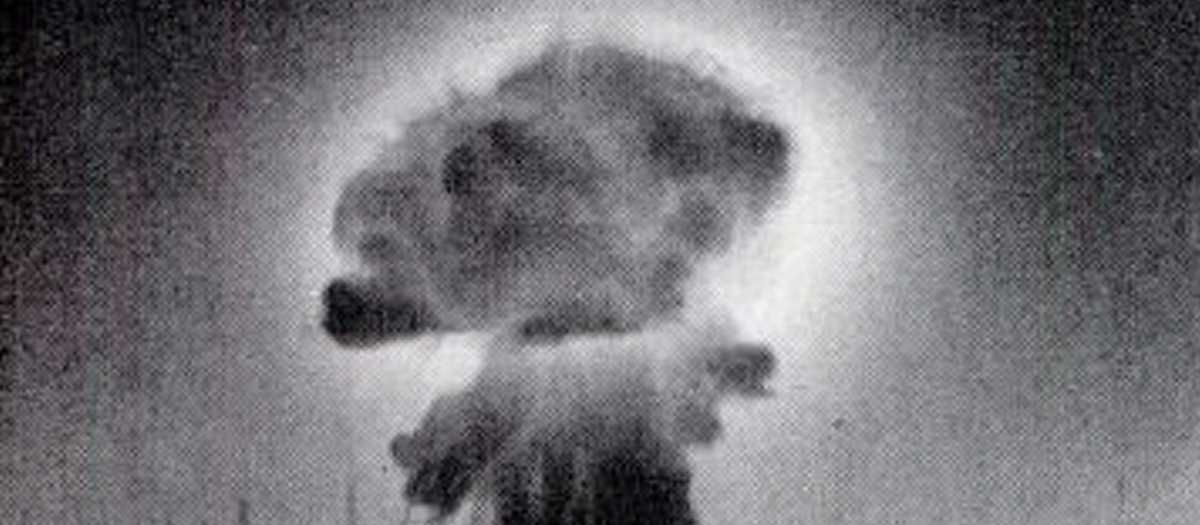
In March 1953, the U.S. Atomic Energy Commission began a series of above-ground nuclear tests at Yucca Flats, Nevada, 67 miles northwest of Las Vegas. The blasts were meant to test the resilience of “the American Home” under nuclear attack. Henry Luce’s LIFE magazine reported in a photo-story that six-room “sacrificial houses” were placed at 3500 and 7500 feet from Ground Zero. The Colonial-style two-story, painted clapboard houses—in stark contrast to the Nevada desert architectural vernacular—were staged with items straight out of a midcentury department store window: up-to-date furniture, drapes, rugs, and stylishly dressed male, female, and child mannequins. These structures and furnishings were meant to measure the effects of fallout on typical America families. LIFE’s dramatic images of the impact and aftermath on American soil made it clear that the nuclear age had come home. Fallout prediction maps were being published in newspapers. National DIY magazines Popular Science and Popular Mechanics published plans for subterranean shelters, and Sunset lent its California design sense to decorating them. By the early 1960s Tucson was becoming ringed with nuclear missile silos, and city government was designating fallout shelters in public buildings. Meanwhile, local swimming pool companies began to offer bomb shelters as a sideline to residential excavation. We’ll look at the decade after nuclear testing began in Nevada and the Tucson angle on midcentury modern subterranean structures for the atomic age.
Jennifer Jenkins studies the vernacular film history of the Southwest in the middle of the 20th century. Her publications include Celluloid Pueblo: Western Ways Film Service and the Invention of the Postwar Southwest (UA Press, 2016) and the work in progress, Screening Americans: Cinema and Citizenship in the Wartime Southwest. She is professor and director of the Southwest Center at the University of Arizona.